-
Adding an Irrevocable Life Insurance Trust

You may decide that you need life insurance—or more of it—to provide for your loved ones. If the value of your life insurance is high, you may want to add protections for the funds in your estate plan using an irrevocable life insurance trust (ILIT). Once you create the ILIT, you fund it either by…
-
Transitioning from a Will to a Revocable Trust

A will allows you to leave your assets to anyone you choose. It names a trusted decision maker (a personal representative) to wind up your affairs. The probate court will oversee the entire administration process at your death. A will may meet some clients’ needs. A revocable living trust is a tool in which a…
-
The Revocable Living Trust After You Die

When you pass away or suffer from incapacity, your successor trustee takes over trust administration per the instructions you provide in the trust document. While you are alive and unable to manage your affairs, you are not a trustee, but you will be a trust beneficiary, so you will not be left penniless. Many revocable…
-
Choosing a Special Needs Trust (SNT) Trustee

Special needs trusts have highly technical terms and administrative requirements, and the rules governing them are complicated. A simple mistake on the part of the trustee could unintentionally hurt the beneficiary. A layperson as the trustee of an SNT can hire an attorney to provide guidance and assistance and they may need to do so…
-
One Beneficiary Inherits a Mortgaged Property

A person can leave a property to a beneficiary under the terms of a will or trust, or with the use of a transfer-on-death deed or Lady Bird deed (in those states that permit these deeds to avoid probate). When the home transfers, a mortgage or loan secured by the home also transfers. The person…
-
SECURE 2.0 Act Considerations

Under the old law, retirement account beneficiaries could take distributions over their individual life expectancy. Under the SECURE Act and SECURE 2.0 Act, the shorter 10-year time frame for taking distributions will accelerate income tax due, possibly bumping your beneficiaries into a higher income tax bracket. If you have a trust, it may have a…
-
Is a POD or TOD Right for My Estate Plan?

An estate plan is a highly individual matter that reflects your personal wishes and family dynamics. As such, there is no “one size fits all” advice for an estate plan. The pros and cons of any estate planning vehicle—be it a payable-on-death (POD), transfer-on-death (TOD), asset protection trust, revocable trust, will, or power of attorney—must…
-
POD and TOD versus a Trust
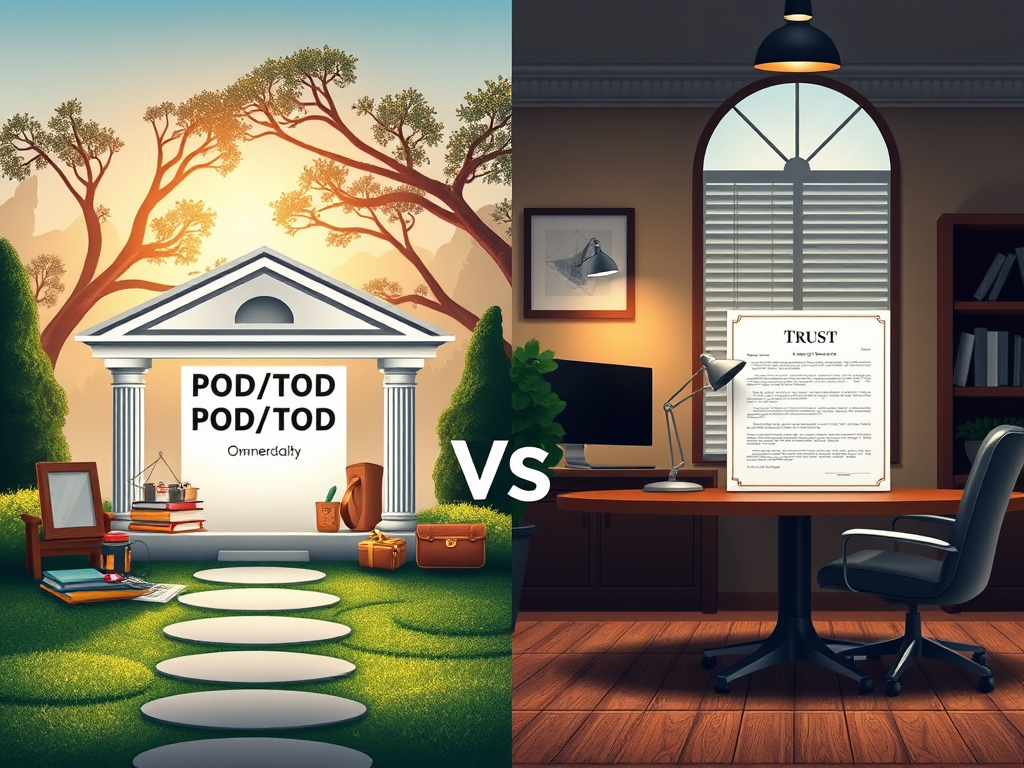
Payable on death (POD) and transfer on death (TOD) designations, like revocable trusts, can be revoked during the owner’s lifetime; that is, the designation can be removed until the owner passes away, and they skip probate. While the owner is alive, they retain account ownership and management. It is only when the owner dies that…
-
Corporate Trustee Considerations

If the trust will continue for many years, it may not be prudent to hire someone who will retire soon. You should ask if the trustee has a succession plan in place. The trustee might need to cooperate and communicate with other caregivers or advocates for your beneficiaries. The trustee must have the time and…
-
Does the Trustee Have Adequate Resources?

Trust administration is an important job, and you should satisfy yourself that the person you appoint as your trustee is well-equipped to fulfill the role. The trustee should have a good system for trust accounting. Trust funds must be held in a separate account and the trustee must keep separate records of income and principal,…

Category: Trust
Eckert & Krautkramer, LLC
Protecting Assets, Preserving Dignity, Ensuring Peace of Mind

Newsletter
Subscribe to our periodic email newsletter – full of legal updates and best practices.
By submitting this form, you are consenting to receive marketing emails from: EK Law, 630 N. 4th St., Wausau, WI, 54403, http://www.eklawwi.com. You can revoke your consent to receive emails at any time by using the SafeUnsubscribe® link, found at the bottom of every email. Emails are serviced by Constant Contact