-
What Happens With Your Will When You Die?

Upon the death of the testator—the person who made the will—probate will be opened if the testator died owning accounts or property in their sole name and without a beneficiary designation. Probate is the court-supervised process in which the testator’s will is validated and administered. The probate process generally unfolds in the following manner: a…
-
One Beneficiary Inherits a Mortgaged Property

A person can leave a property to a beneficiary under the terms of a will or trust, or with the use of a transfer-on-death deed or Lady Bird deed (in those states that permit these deeds to avoid probate). When the home transfers, a mortgage or loan secured by the home also transfers. The person…
-
Why Does the Type of Devise Matter-Ademption?

Ademption refers to the withdrawal or nullification of a gift because the property identified in the will is no longer in the willmaker’s estate. Ademption applies to specific devises where the property is no longer in the willmaker’s estate. For example, if Fred’s Canopysaurus Flintmobile is stolen and never recovered, it will obviously be impossible…
-
What are Demonstrative and Residuary Devises?

A demonstrative devise is a general gift that is payable from a specified source. For example, Mario leaves his brother Luigi a gift of $25,000 from his Bank of Mushroom Kingdom savings account or Mario leaves Luigi a gift of any three plungers in Mario’s extensive plunger collection. A residuary devise is a gift of…
-
What are the Types of Devises?

There are several different types of devises: general, specific, demonstrative, and residuary. A general devise is a gift of a specified quantity or value that is to be made from any property of that type. For example, if Ward leaves his son Beaver a gift of $10,000, that is a general devise and may be…
-
What Is a Devise in My Estate Plan?
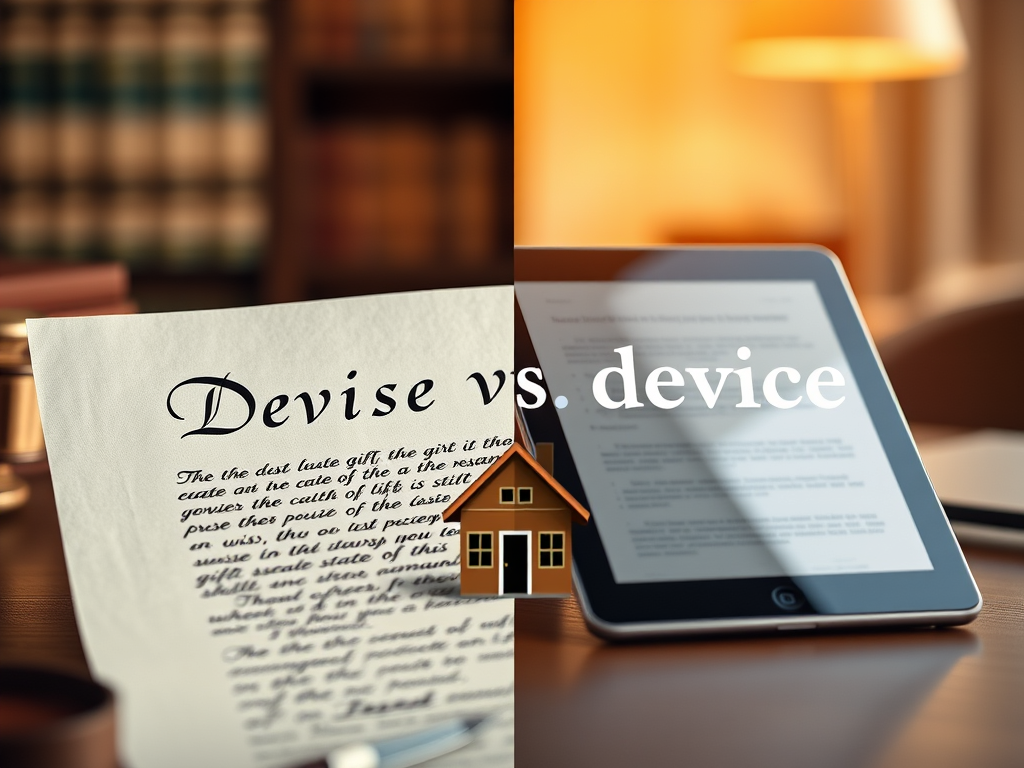
Estate planning has uncommon terms. Some of the words may also be homophones—words that are pronounced the same but have different meanings and spellings. For example, an heir is a person entitled under state law to receive money or property from another person when that person dies. In contrast, air is an invisible gaseous substance.…
-
What Happens When I Die?

Spiritually, this is a question best left to religion or philosophy. But materially, you can specify what happens to your money and property after you pass away using a will or revocable living trust. A will is the most basic estate planning document that everybody should have. A will should name who will receive your…
-
Knives Out-Will Contest Requires Proof

When the Thrombey clan receives the news that they will inherit nothing, they shift their focus to contesting the will. The Thrombeys raise two arguments. They first suggest that Harlan lacked testamentary capacity, or was not of sound mind when he changed his will. However, the family eventually concedes that Harlan was in full possession…
-
Why the Knives May Come Out at Death

The murder mystery Knives Out featured whodunit intrigue surrounding the murder of a wealthy author and surprise changes to his will. Knives Out begins with the death of Harlan Thrombey. He is survived by two children, a daughter-in-law, and three grandchildren. Each of these presumptive heirs assumed they would receive an inheritance. A week prior…

Category: Will
Eckert & Krautkramer, LLC
Protecting Assets, Preserving Dignity, Ensuring Peace of Mind

Newsletter
Subscribe to our periodic email newsletter – full of legal updates and best practices.
By submitting this form, you are consenting to receive marketing emails from: Eckert & Krautkramer, LLC, 630 N. 4th St., Wausau, WI, 54403, http://www.eklawwi.com. You can revoke your consent to receive emails at any time by using the SafeUnsubscribe® link, found at the bottom of every email. Emails are serviced by Constant Contact